CLICK HERE FOR BLOGGER TEMPLATES AND MYSPACE LAYOUTS »
Everything in life is writable about if you have the outgoing guts to do it, and the imagination to improvise. The worst enemy to creativity is self-doubt. ~Sylvia Plath

Monday, May 9, 2011

Body Odor No More


Body odor can be solved or minimized. The objective is to reduce the bacteria in the skin despite the hot and humid weather.

Here are some tips to prevent body odor:
  • Take a bath in the morning.
  • Rinse body with water mixed with powdered tawas. A tablespoon or two of powdered tawas are good enough for a regular-size pail.
  • Put on a fresh set of clothing and underwear.
  • Take a good body scrub with soap and water, concentrating on the underarms, neck, and groins before going to bed in the evening.
  • Watch your diet. Go far the bland ones-not hot, spicy flavoring or rich, fatty foods. Eat more leafy vegetables and fruits. Drink plenty of water. Avoid soft drinks and coffee. A balanced diet will empty the bowels and urinary bladder daily.
  • Wear clothes made from light materials like pure cotton during hot weather. Silk and synthetic materials cannot absorb sweat. For women, shave off excess underarm hair. Hairs in the armpit collect secretions, debris, and bacteria. It is unbecoming for a lady to have unshaved underarms.
  • Apply powdered tawas directly to the underarms and other parts of the body after a bath. It kills odor-causing bacteria and absorb moisture. If powdered tawas is too irritating to the skin, baking soda-talcum powder mixture is a good substitute.
  • Wash liberally with water after using the toilet. Ladies should especially do so during the menstrual period, and change pad as often as needed.
If the problem still stinks despite the daily hygiene, a steam bath once a week may help. This sweating treatment cleans the skin pores and removes impurities. If you can have the luxury of a mint or eucalyptus flavored steam bath, the better. It will not only clean your skin but make it smell good as well.

-- Herminia G. Landion

Be CAR CARE Aware


Your car is one of your big investments, so in order to maintain its reliability, preserve its drivability, and protect its resale value, you need to be car care aware. Take the following dos and don'ts from the senior service adviser of Honda Cars-Shaw, Abelardo "Dong" Vicente.

Dos
  1. Bring car to service center or talyer at least every six months, for periodic maintenance to avoid engine breakdown.
  2. Keep tires properly inflated to provide you the best combination of handling, treading life, and riding comfort. Visually check all tires every day. If a tire seems under inflated, verify it with a tire gauge. Even tires in good condition may lose air due to leakage. Make sure your spare tire is in good condition, too.
  3. Check battery condition every month, including proper electrolyte level and corrosion on battery terminals. Start the engine for at least 10 minutes to warm it up before the drive.
Don'ts
  1. Don't open hood to strangers especially if your car has a breakdown on the road.
  2. Don't use hard water like salt water on tap water to top up radiator coolant or to wash car with. It corrodes inside engines and car body.
  3. Don't use activities on engine oil, fuel, power steering fluid, and automatic transmission fluid unless approved by the car's manufacturer.
How to determine your car's condition through smoke emission
If the color of exhaust gas is:

Bluish - the engine oil mixing within the combustion chamber
White - the water or coolant is mixing within the combustion camber; the engine will overheat
Black - excessive fuel is not burned properly inside the combustion chamber; will make engine fuel consumption high
Colorless - the engine is performing the best optimum combustion

-- Melinda H. Tormes (coordinator for market research and advertising)

How To Eat Well Without Gaining Weight

What to eat

  • Eat at least five servings of fresh fruit a day. Fresh fruit does not lead to obesity, as some people erroneously believe. To the contrary, in addition to having very low energy density (few calories in a lot of weight), it provides vitamins and fiber the\at inhibit obesity.
  • Eat a plate of fresh vegetable salad each day.
  • Reduce or eliminate the typical fast foods: hamburgers, hot dogs and other sausages, snacks, sauces, pastries, and sweets.
  • Drink enough water each day so that your urine is clear, colorless, and odorless. It's been shown that a high intake of water and a low intake of salt is a simple way to avoid gaining weight.
Where to eat
  • As much as possible, practice the traditional custom of the entire family sitting down for a meal together.
  • Do not eat in the bus, the car, as you walk, or as you talk on the telephone. These activities will distract your mind, causing you to eat more without feeling satisfied.
How to eat
  • Eat slowly, savoring and chewing each mouthful well. This will improve your digestion and help you to eat less than if you ate rapidly.
When to eat
  • Eat at regular times, and avoid snacking between meals.
  • Set aside enough time for your meals, especially breakfast, which should be your most important meal of the day.
STAY HEALTHY!!

--George Pamplona-Roger (Fast Food, Fast Disease)

Friday, April 29, 2011

TIME-SAVING TIPS


Are you a procrastinator? Try these time-saving tips for efficiency and more productivity in everything you do.

  • Write out a daily "To Do List" making sure you include your top priorities.
  • On Mondays, plan your week's activities.
  • Delegate routine chores.
  • Set deadlines for yourself and your subordinates.
  • Use waiting time to catch up on routine reading or to plan projects.
  • Jot down spontaneous notes and ideas.
  • Break down unpleasant tasks into small, non-threatening jobs.
  • Cut off nonproductive activities --- e.g. phone calls, rambling conversations.
  • Try and handle every piece of paper only once.
  • Keep your work space cleared and ready for action. Don't let clutter accumulate. Clean as you go.
  • Have a place for everything, so you know exactly where to find it.
  • Schedule a meeting only if you can describe its purpose.
  • Skim for important words and headlines when you read.
  • Listen carefully. Ask direct questions to obtain needed information quickly.
  • Learn to say "no". There is a limit to your energy and ability to accomplish an endless list of tasks.
  • Do your thinking on paper or on your computer. This motivates you to continue, while you see your progress.
  • Eliminate unnecessary interruptions. Close your office door. Let your staff take messages, and then return calls all at once.
  • Set aside your most productive time period every day to do your creative work.
  • Save all trivial matters for a three-hour session once a month.
  • Avoid people who drain you and e-mail people who regularly talk too much on the phone.

-- Thanks to ROBERT HARLAND .

Monday, March 14, 2011

Are YOU an INTERNET ADDICT?


When a person's major focus in on one behavior only, he may be suffering from a behavioral addiction. This addiction includes, among other things, gambling, shopping, watching pornography, work, and using computer and the Internet.

Let's talk about computers and the Internet. They are a necessity for today's generation. Computers and the Internet are needed in the workplace, in school, and at home. But the Internet has it's own downside too. When you become so attached to the computer that you start to live in an artificial world, your physical, emotional and spiritual health is in danger.

Knowing the early signs of computer and Internet addiction in a spouse, a brother or a sister, a friend, a colleague, or even yourself is of extreme importance.

But HOW DO YOU KNOW THAT YOU HAVE TOO MUCH OF COMPUTER OR THE INTERNET? If you answer YES to at least 7 of the questions below, it is enough for you to be diagnosed as having a pathological Internet addiction.
  1. Do I lose interest in the other activities I used to engage in?
  2. Would I rather miss my regular meals than miss the Internet?
  3. Am I craving for more time online and feel restless when not engaged?
  4. Do I feel irritable and aggressive when interrupted or when the connection is low?
  5. Do I stay in the computer longer than intended?
  6. Am I neglecting family and friends and/or responsibilities in order to be online?
  7. Is my Internet use interfering with my job or school activities?
  8. Do I use the Internet as an outlet when lonely, upset or sad?
  9. Do I lie about the amount of time I spend on the Internet and what I am browsing?
  10. Am I sleeping late because of Internet browsing?

So, how do you avoid computer and Internet addiction? Here are some suggestions:

  1. Parents should be role models for their children.
  2. Put the computer in a common place in the house like the living room so that parents can easily keep an eye on their children's use, thus helping them to avoid visiting undesirable websites.
  3. Have family meals at the table at regular times.
  4. Get involved in sports. Develop a healthy relationship with your team.
  5. Go to bed on time to get a good night's rest.
  6. Develop a strong network of friends. This provides mental and emotional support.
  7. Plan for family activities.
  8. Limit computer use. List the things you need in the web, set an alarm clock to be sure you get off when it sounds. Stick to your set time.
  9. Be aware of the warning signs of addiction.
  10. Seek professional help.
  11. Most of all, submit yourself to God. Ask Him to help you detach yourself from the excitement of computer and the Internet.
Computer and the Internet are no doubt necessities. But they can also ruin lives and relationships if not handled responsibly.


************
Thanks to : HEALTH&HOME (Jul-Aug 2010)
Evelyn Villaflor-Almocera

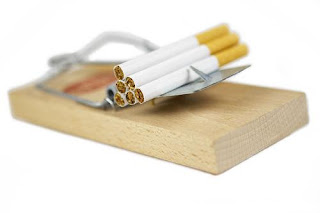
THE TOBACCO TRAP


The decision to smoke is almost always made during the teen years when teen believe nothing bad could ever happen to them. Many keep using tobacco products throughout adulthood, not always because they want to, but because they are addicted to a product that is powerfully habit-forming. Whether they start because they are addicted to a product that is powerfully habit-forming. Whether they start because of peer pressure, to rebel against their parents, or because they think it's cool -- millions of teens get hooked on a habit that will kill hundreds of thousands of them a year when they're adults.

Since the first Surgeon General's report on health and smoking in 1964, an endless amount of research has shown how smoking hurts your health. Tobacco is currently known to cause heart disease, chronic lung disease, and stroke, not to mention cancer of the lungs, esophagus, larynx, mouth and bladder. Tobacco is filled with dozens and dozens of chemicals that are deadly all by themselves. So, when packed together with each puff of smoke, it's no wonder they kill people.

If you use tobacco, there are compelling reasons for you to quit. The rewards of quitting are tremendous, and they begin immediately. You’ll experience the benefits of not using tobacco within 20 minutes of quitting, and as your tobacco-free days accumulate, the benefits will accumulate, too. Quitting tobacco will improve your health, your finances, your self-esteem and your everyday life – immediately and over the long term – in ways you may never have imagined.


What Happens When You Quit

  • Immediately after quitting smoking, heart rate and blood pressure, which is abnormally high while smoking, begin to return to normal.
  • Within a few hours, the level of carbon monoxide, which reduces the blood’s ability to carry oxygen, begins to decline.
  • Within a few weeks, circulation improves, you don’t produce as much phlegm, and you don’t cough or wheeze as often.
  • The workload on the heart is decreased and cardiac function is improved.
  • Food tastes better, and your sense of smell returns to normal.
  • Everyday activities no longer leave you out of breath.
  • Within several months of quitting, you experience significant improvements in lung function.
  • In one year, your risk of heart disease, heart attack, and stroke is halved.
  • In five years, many kinds of cancer, including lung, larynx, mouth, stomach, cervix, bladder, show decline in risk, and that decline approaches the risk of someone who has never smoked.
  • Within 10 to 15 years, risk of lung disease, including bronchitis and emphysema, are decreased.
  • Conditions such as cataracts, macular degeneration, thyroid conditions, hearing loss, dementia, and osteoporosis are positively affected.
  • Nerve endings in the mouth and nose begin to regenerate, improving taste and smell.
  • Medications may work better, enabling some to be taken in decreased doses.
  • If you’re taking birth control pills, quitting smoking will decrease your chance of heart attack and stroke due to clotting.
  • You’ll have decreased risk for impotence and infertility.
  • If you’re pregnant, you’ll protect your unborn child from Sudden Infant Death Syndrome (SIDS) and low birth weight.
  • Years will be added to your life: people who quit smoking, regardless of their age, are less likely than those who continue to smoke to die from smoking-related illness.

When you quit smoking:

  • your breath will smell better
  • stained teeth will get whiter
  • your clothes and hair will smell better
  • your fingers and fingernails will no longer look yellow
  • you’ll have better oral health
  • you’ll have a better chance for fewer skin wrinkles

If you're a tobacco user, it's never too late for a change! YOU can and YOU must start it within your inmost self. It just take a little time and a lot of suffering, that's all.


Thanks to:

* Zachary Goldstein (author of LiSTEN magazine)

Related Posts Plugin for WordPress, Blogger...